What Is Volumetric Weight and How Is It Calculated?
Volumetric weight is one of the most important factors affecting international shipping costs and the transportation of goods between countries. Shipping companies do not always calculate shipping charges based solely on the actual weight of a parcel. They also consider the amount of space the shipment occupies during transportation.
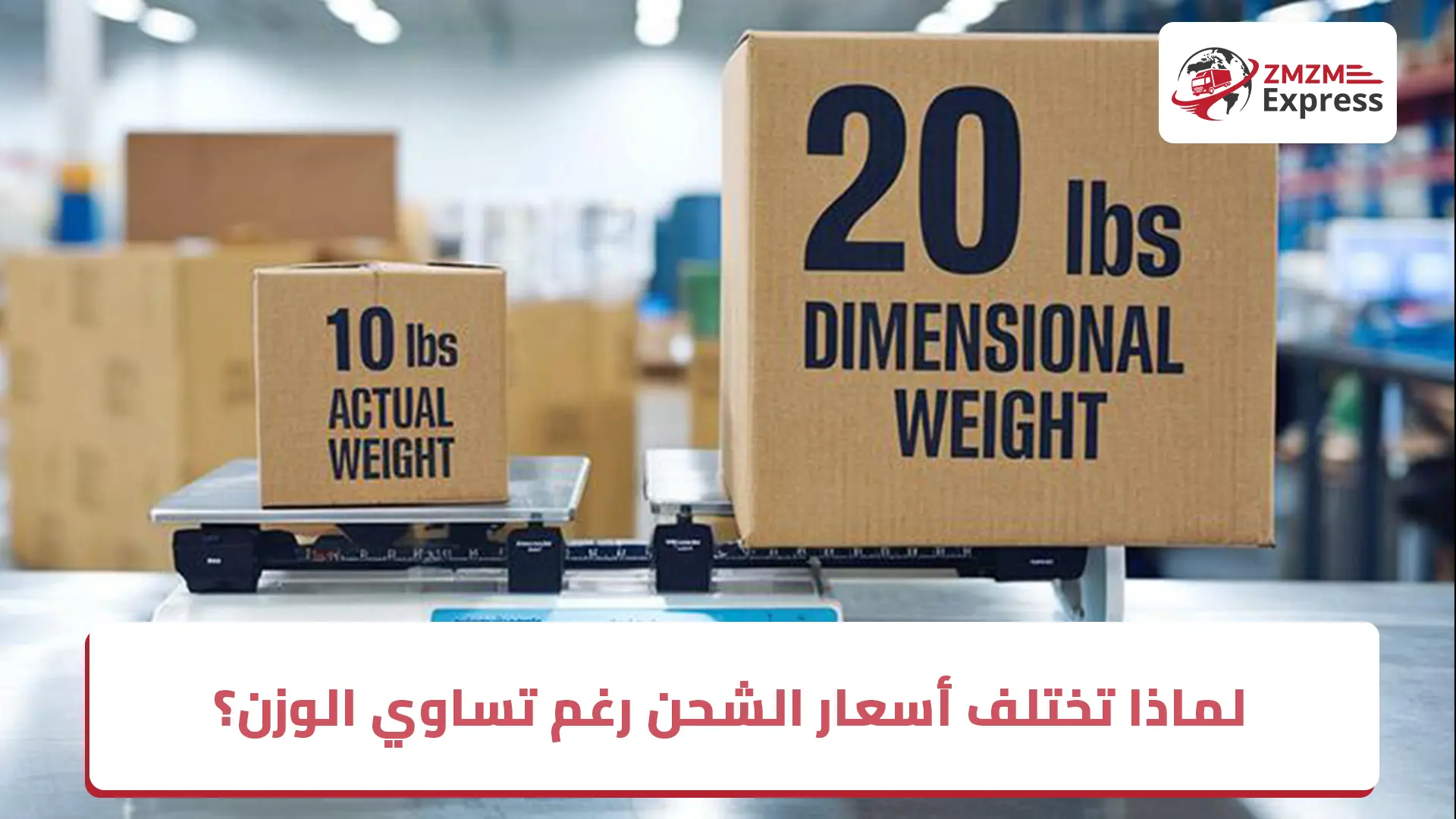
This is why shipping a large, lightweight box can sometimes cost more than shipping a smaller, heavier package, even if its actual weight is lower.
If you are planning to ship personal parcels, furniture, or commercial goods from the UAE to another destination, understanding volumetric weight and how to calculate it can help you estimate shipping costs and avoid unexpected charges.
In this guide by Zmzm Express, we explain what volumetric weight means, how it differs from actual weight, how to calculate it, and how shipping companies determine the weight used to calculate shipping charges.
What Is Volumetric Weight?
Volumetric Weight, also known as Dimensional Weight, is a calculated weight based on the external dimensions of a shipment: its length, width, and height, rather than its actual weight alone.
Shipping companies use volumetric weight to estimate how much space a shipment occupies inside an aircraft, truck, or another means of transportation.
Large packages can take up considerable space even when their contents are lightweight.
For example, a large box containing clothes or pillows may have an actual weight of only 5 kg, but its size could result in a volumetric weight of 15 kg. In this situation, the shipping company may use the volumetric weight to calculate the shipping charges.
Understanding volumetric weight helps individuals and businesses better understand how international shipping prices are calculated.
Are you looking for a reliable, hassle-free shipping solution?
Zmzm Express offers you the best regional and international shipping services, complete with comprehensive customs clearance to ensure your goods arrive safely and in record time.
How Is Volumetric Weight Calculated?
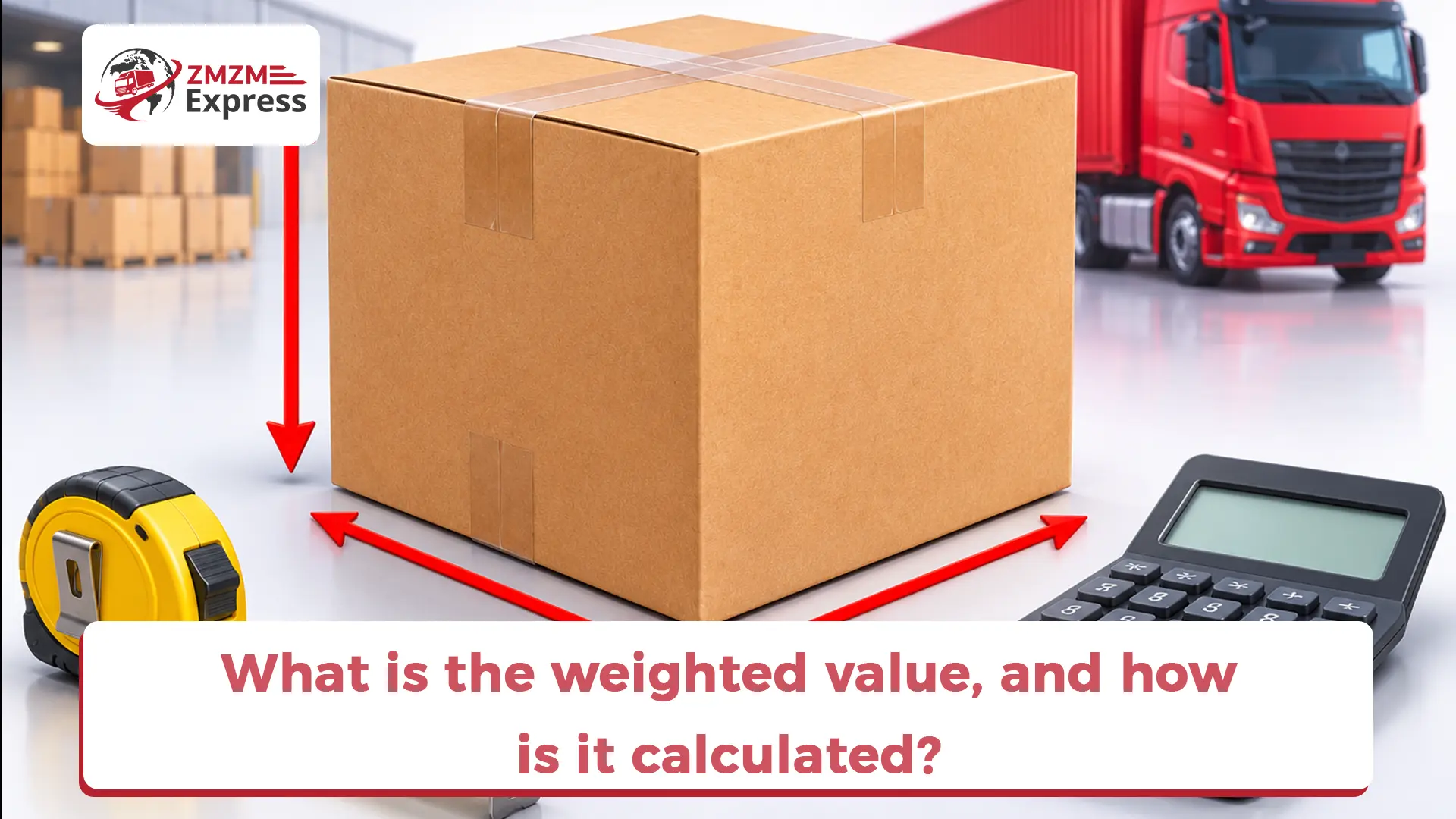
Volumetric weight is calculated using a formula based on the external dimensions of the package and the conversion factor used by the shipping company.
Volumetric Weight Formula:
Volumetric Weight = (Length × Width × Height) ÷ Conversion Factor
All measurements should be in centimetres, and the conversion factor varies depending on the shipping company, service type, and transportation method.
Common conversion factors include:
5000: Used by many express shipping services.
6000: Used by some air freight and transportation services.
Practical Example of Volumetric Weight Calculation:
Suppose you have a shipping box with the following dimensions:
Length: 60 cm.
Width: 40 cm.
Height: 40 cm.
First, multiply the three dimensions:
60 × 40 × 40 = 96,000 cm³
If the shipping company uses a conversion factor of 5000:
96,000 ÷ 5000 = 19.2 kg.
The volumetric weight of the shipment is therefore 19.2 kg.
However, if the company uses a conversion factor of 6000:
96,000 ÷ 6000 = 16 kg.
This demonstrates why it is important to check the conversion factor used by your shipping company before estimating the cost of sending a parcel.
What Is the Difference Between Volumetric Weight and Actual Weight?
The main difference between volumetric weight and actual weight is how each one is measured.
Actual Weight: The actual weight of a shipment measured using a weighing scale, usually in kilograms.
Volumetric Weight: A calculated weight based on the external dimensions of the shipment and the space it occupies during transportation.
Chargeable Weight: The weight used by the shipping company to calculate transportation charges. For services that apply this pricing method, it is generally the higher of the actual weight and volumetric weight.
For example:
| Weight Type | Value |
|---|---|
| Actual Weight | 10 kg |
| Volumetric Weight | 19.2 kg |
| Chargeable Weight | 19.2 kg |
In this example, shipping charges are calculated using 19.2 kg rather than the actual weight of 10 kg, based on the assumed pricing policy.
Why Do Shipping Companies Use Volumetric Weight?
Shipping companies use volumetric weight to balance the weight of goods against the space they occupy during transportation.
In air freight, aircraft capacity is limited, so it is important to distribute cargo efficiently while making the best use of available space and weight capacity.
The same principle applies to land transportation, where the size of parcels, boxes, and furniture affects the available space inside trucks.
The main reasons why volumetric weight matters include:
- Determining Shipping Costs: It helps calculate transportation charges based on the space occupied by goods.
- Managing Cargo Capacity: It supports better cargo distribution inside aircraft and trucks.
- Improving Transportation Efficiency: It helps shipping companies make better use of available space.
- Estimating Shipping Prices: It gives customers a clearer idea of potential costs before sending their shipments.
How Does Volumetric Weight Affect International Shipping Costs?
Volumetric weight directly affects shipping costs, especially when transporting large but lightweight goods.
For example, a shipment containing household furniture, clothing boxes, or lightweight household items may cost more to ship than a smaller, heavier shipment because it occupies more space during transportation.
The calculation method also differs depending on the shipping method.
1. Air Freight
Volumetric weight is widely used in air freight. Shipping companies compare the actual weight with the volumetric weight and generally use the higher value to determine the chargeable weight, subject to the carrier’s pricing conditions.
2. Land Freight
In land freight, transportation companies may calculate charges based on actual weight, volumetric weight, or other factors such as the space occupied inside the truck.
The pricing method depends on the transportation route, type of goods, and company policy.
3. Sea Freight
Sea freight pricing works differently, particularly for Less than Container Load (LCL) shipments.
Shipping companies commonly use the Weight or Measure (W/M) principle, comparing the shipment’s volume with its corresponding weight measurement and applying the appropriate chargeable basis according to the freight tariff and shipping conditions.
Therefore, it is important to understand how charges are calculated before choosing the most suitable shipping method.
How Can You Reduce Volumetric Weight and Save on Shipping Costs?
If you want to reduce international shipping costs, there are several practical steps you can take to minimize the external dimensions of your packages without compromising the safety of your goods.
- Choose the Right Box Size: Avoid using boxes that are significantly larger than the products inside.
- Reduce Empty Space: Arrange protective materials efficiently to minimize unnecessary space.
- Disassemble Furniture When Possible: Separating certain furniture components can help reduce the space required during transportation.
- Organize Goods Carefully: Properly arranging products inside boxes helps maximize available space.
- Avoid Excessive Packaging: Use suitable protective materials without adding unnecessary bulk.
- Measure Boxes Before Shipping: Measure the external dimensions after packaging to obtain a more accurate volumetric weight estimate.
Remember that reducing protective packaging should never compromise the safety of your shipment.
Does Volumetric Weight Differ Between Shipping Companies?
Yes. Volumetric weight can differ between shipping companies because conversion factors and pricing conditions are not standardized across all transportation services.
Some companies use a conversion factor of 5000, while others use 6000 or different factors depending on the service type and transportation method.
Measurement procedures, weight rounding, and minimum chargeable weight requirements may also vary.
When requesting a shipping quotation, make sure to check the following:
- Which conversion factor is used to calculate volumetric weight?
- How are length, width, and height measured?
- Are shipping charges based on actual weight, volumetric weight, or whichever is higher?
- Are there additional charges for packaging, handling, or other services?
Frequently Asked Questions About Volumetric Weight (FAQ)
1. How do I calculate volumetric weight?
Multiply the package’s length, width, and height in centimetres, then divide the result by the shipping company’s conversion factor, such as 5000 or 6000.
2. Is volumetric weight the same as actual weight?
No. Actual weight is the weight measured using a scale, while volumetric weight is calculated based on the package’s external dimensions and the space it occupies.
3. Which is more expensive in shipping: actual weight or volumetric weight?
Neither is always higher. However, shipping services that use chargeable weight generally compare both values and calculate the shipping charges using the higher one.
4. Why does a large box cost more to ship even when it is lightweight?
A large box occupies more space inside a transportation vehicle. Its volumetric weight may therefore be higher than its actual weight, resulting in higher shipping charges.
5. Is volumetric weight used in sea freight?
Yes, but the pricing method differs from air freight. For LCL sea freight, shipping charges are commonly calculated using the weight or volume basis, depending on the freight tariff.
6. How can I know the shipping cost before sending my goods?
Prepare the external dimensions and actual weight of your packages, specify the shipping destination, and request a quotation from your shipping company to determine the applicable chargeable weight and estimated cost.
Understanding volumetric weight is essential for anyone planning to ship parcels, goods, or furniture internationally. It helps customers understand how shipping costs are calculated, choose suitable packaging, and avoid unexpected transportation charges.
With Zmzm Express, you can enquire about shipping services and learn more about how actual and volumetric weight are calculated before sending your shipment.
Prepare your package dimensions, actual weight, and destination, then request a suitable shipping quotation so you can understand the shipping details from the beginning until your shipment reaches its destination.