Required Documents for International Shipping
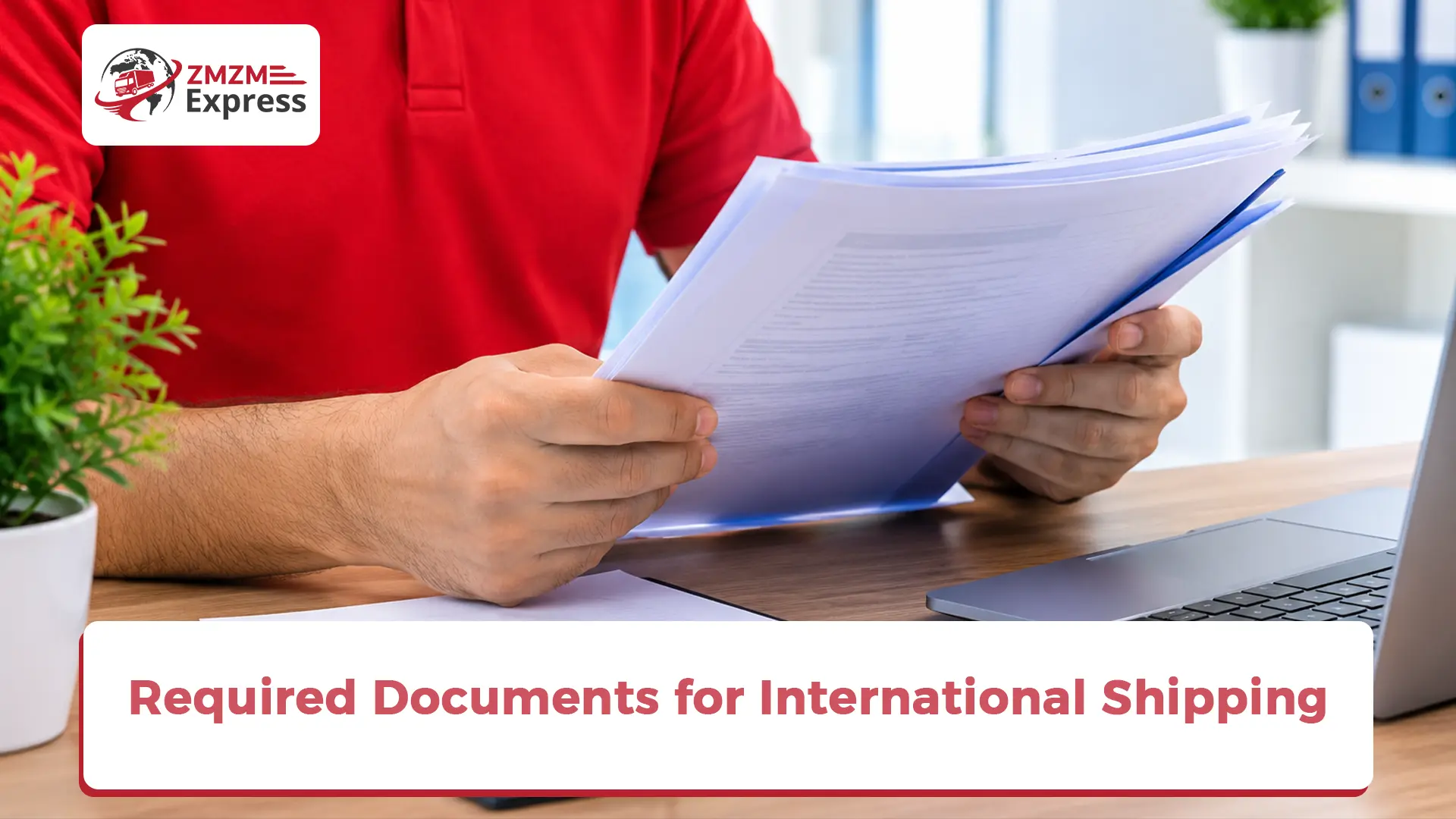
The core required documents for international shipping consist of five essential records needed to move goods across borders and clear customs without delays or penalties: the Commercial Invoice, Packing List, Bill of Lading (or Air Waybill), Certificate of Origin, and the Customs Export/Import Declaration. These documents verify cargo ownership, establish monetary value for duty assessment, and confirm compliance with safety and trade regulations in both the origin and destination countries.
In global trade, a single missing form or a minor typo in shipping paperwork can hold cargo at ports or airports for weeks, leading to costly demurrage and storage fees. At Zmzm Express, we streamline cross-border logistics for businesses and individuals. Below is a comprehensive breakdown of the paperwork required to keep your supply chain moving smoothly.
Essential Customs Clearance and Shipping Documents
Whether you are shipping via air, sea, or land freight, ensure the following primary documents are accurately prepared before your cargo leaves the supplier’s warehouse:
1. Commercial Invoice
The Commercial Invoice is the most critical document in international trade. It serves as the official proof of sale and financial transaction between the exporter (seller) and the importer (buyer). Customs authorities rely on this document to assess the value of the goods and calculate applicable import duties and taxes.
- Key Information Required: Full contact details of the exporter and importer, invoice number and date, detailed product descriptions, Harmonized System (HS) codes, quantities, unit prices, total value, agreed Incoterms (e.g., FOB, CIF, EXW), and currency of transaction.
2. Packing List
A Packing List provides a granular breakdown of the physical contents within every box, pallet, or container in the shipment. Freight forwarders, customs officials, and warehouse receivers use it to verify that the physical cargo matches the Commercial Invoice without opening every package.
- Key Information Required: Type of packaging (cartons, crates, pallets), total number of packages, Net Weight and Gross Weight per package, and exact dimensions (Length × Width × Height) in Cubic Meters (CBM).
3. Bill of Lading (B/L) or Air Waybill (AWB)
The Bill of Lading is a legally binding contract of carriage between the shipper and the carrier. It acts simultaneously as a receipt of goods and a document of title. The terminology varies by transport mode:
- Ocean Bill of Lading (B/L): Used for sea freight. An original B/L can be negotiable, meaning it transfers ownership of the cargo.
- Air Waybill (AWB): Used for air freight. It is non-negotiable and allows for faster cargo release at destination airports.
- CMR Waybill: Used for cross-border road freight transport.
4. Certificate of Origin (COO)
Issued by a local Chamber of Commerce or government authority in the exporting country, the Certificate of Origin officially declares the country where the goods were manufactured, produced, or substantially transformed.
- Why It Matters: It determines whether your goods qualify for reduced or zero customs duties under Free Trade Agreements (FTAs) and ensures compliance with trade embargoes or import restrictions.
5. Customs Export/Import Declaration
This is an official form submitted electronically or on paper to customs authorities at both exit and entry ports. It summarizes the shipment’s nature, tariff classifications, declared value, and tax obligations.
Are you looking for a reliable, hassle-free shipping solution?
Zmzm Express offers you the best regional and international shipping services, complete with comprehensive customs clearance to ensure your goods arrive safely and in record time.
Comparison of Core International Shipping Documents
| Document Name | Issued By | Primary Purpose | Mandatory Status |
| Commercial Invoice | Seller / Exporter | Declares cargo value for customs duty calculation | Mandatory for all commercial shipments |
| Packing List | Seller / Exporter | Details weights, dimensions, and packaging count | Mandatory for multi-package cargo |
| Bill of Lading / AWB | Carrier / Forwarder | Contract of carriage and proof of cargo receipt | Mandatory for all freight modes |
| Certificate of Origin | Chamber of Commerce | Proves manufacturing country for tariff rates | Mandatory in most Middle Eastern & global ports |
| Insurance Certificate | Insurance Provider | Protects against financial loss from damage/theft | Optional (Mandatory under CIF Incoterms) |
Additional Documents Based on Cargo Type
Certain regulated commodities require specialized permits to protect public health, safety, and the environment. If you are shipping any of the following items, prepare these supplementary records:
- Food, Agricultural, and Plant Products: Require a Health Certificate or Phytosanitary Certificate verifying that the items are free from pests, diseases, and are safe for human consumption.
- Chemicals and Hazardous Materials: Require a Material Safety Data Sheet (MSDS) and a Dangerous Goods Declaration (DGD) to ensure safe handling and storage during transit.
- Electronics and Telecom Equipment: Often require Certificates of Conformity (such as SABER for Saudi Arabia, CE for Europe, or ECAS for the UAE) to prove compliance with safety and frequency standards.
- Pharmaceuticals and Medical Devices: Require prior import permits from the destination country’s Ministry of Health or Food and Drug Authority, alongside a Certificate of Analysis (COA).
Expert Tips from Zmzm Express to Prevent Customs Delays
Documentation errors account for nearly 40% of all international customs holds. Follow these best practices to ensure seamless clearance:
- Ensure 100% Data Consistency: Verify that the consignee’s name, address, package count, and gross weight match identically across the Commercial Invoice, Packing List, and Bill of Lading. Even a minor discrepancy can trigger a physical inspection.
- Verify HS Codes: Always assign the accurate 6-to-12-digit Harmonized System (HS) code for every item. An incorrect code can result in overpaid duties, fines, or unexpected permit requirements.
- Use Specific Item Descriptions: Avoid vague terms like “spare parts,” “electronics,” or “samples.” Use clear, descriptive language such as “stainless steel automotive engine valves” or “lithium-ion smartphone batteries.”
- Check Legalization Requirements: Several countries require the Commercial Invoice and Certificate of Origin to be attested by their embassy or consulate in the exporting country prior to shipment arrival.
Frequently Asked Questions (FAQ)
No. For personal effects or household goods, a commercial registration or Certificate of Origin is typically not required. Shippers generally only need a copy of their passport or ID, an itemized Packing List, and a declared value for customs purposes, provided the quantities do not suggest commercial resale.
Losing an Original Bill of Lading is a serious issue because it represents legal title to the goods. To release the cargo without it, the importer must usually provide a costly Bank Guarantee equal to the cargo’s value to the shipping line. To avoid this risk, ask your freight forwarder about using a Telex Release or Express Release when possible.
At Zmzm Express, our logistics specialists perform a pre-shipment document audit before your cargo departs. We assist with accurate HS code classification, airway bill and bill of lading generation, and direct coordination with customs brokers to ensure your shipments clear borders quickly and cost-effectively.